In “Midnight in the Garden of Good and Evil,” John Berendt accurately described the blanket of darkness that covers the South Carolina Lowcountry after dark. The live oaks and Spanish moss rooted in centuries of history frame the area for modern-day travelers while creating a mysterious ambiance that exist beside everyday life.
Indeed, there is something about the Lowcountry after dark.
Is it any wonder that Hilton Head Island, Bluffton and Beaufort have collected more than their share of ghost stories?
Some of these ghastly tales are tied to documented people and places while others have been passed down for generations, changing a little with every telling.
And that distinction matters, because these are legends, not historical records.
In the Lowcountry, history and folklore have always had a habit of sharing the same porch.
Here are a few of our favorite local tales.
The Blue Lady of Hilton Head Island
One of Hilton Head Island’s best-known ghost stories belongs to the old Leamington Lighthouse, tucked within what is now Palmetto Dunes.
Built around 1880, the lighthouse once helped guide ships through the waters near Port Royal Sound. The haunting came later.
According to one version of the legend, lighthouse keeper Adam Fripp was struggling to keep the light burning during a powerful hurricane in 1898 when he suffered a heart attack. His daughter Caroline reportedly took over, moving between her dying father and the lighthouse throughout the storm while wearing a long blue dress.
The story says Caroline died shortly afterward, although the details change depending on who is telling it. Some versions have her dying of grief. Others give the story an entirely different ending.
What remains consistent is the Blue Lady.
For generations, people have claimed to see the figure of a woman in blue near the lighthouse during stormy or rainy weather, sometimes appearing to keep watch just as Caroline supposedly did that night.
The conflicting versions are almost part of the appeal. A good ghost story rarely travels through a century without picking up a few extra shadows along the way.
Read more about the Blue Lady and other Lowcountry legends from Pink Magazine.
William Baynard Still Roams Hilton Head
Long before Hilton Head became known for beaches, golf and bike paths, plantations occupied much of the island.
One of the most famous was Braddock’s Point Plantation, associated with William Baynard and the ruins that still stand inside Sea Pines today.
Local legend says Baynard can still be encountered at two places connected to his life: the Stoney-Baynard Ruins and Zion Cemetery.
According to one version of the tale, Baynard was devastated by the death of his wife Catherine and regularly visited her grave until his own death years later. Stories later developed of his spirit returning to Zion Cemetery, particularly on dark or stormy nights.
Then there is the Baynard Mausoleum itself.
The old mausoleum at Zion Cemetery has inspired several variations of Hilton Head folklore, including stories involving lost treasure, disturbed graves and even a funeral procession that supposedly never quite ended. LOCAL Life includes multiple Baynard-related stories among its collection of Hilton Head legends.
And if one haunted location wasn’t enough, Baynard apparently has a second address.
Visitors and storytellers have also associated his ghost with the Stoney-Baynard Ruins in Sea Pines, where the remains of the former plantation sit among the trees.
Bluffton’s Ghostly Carriage House
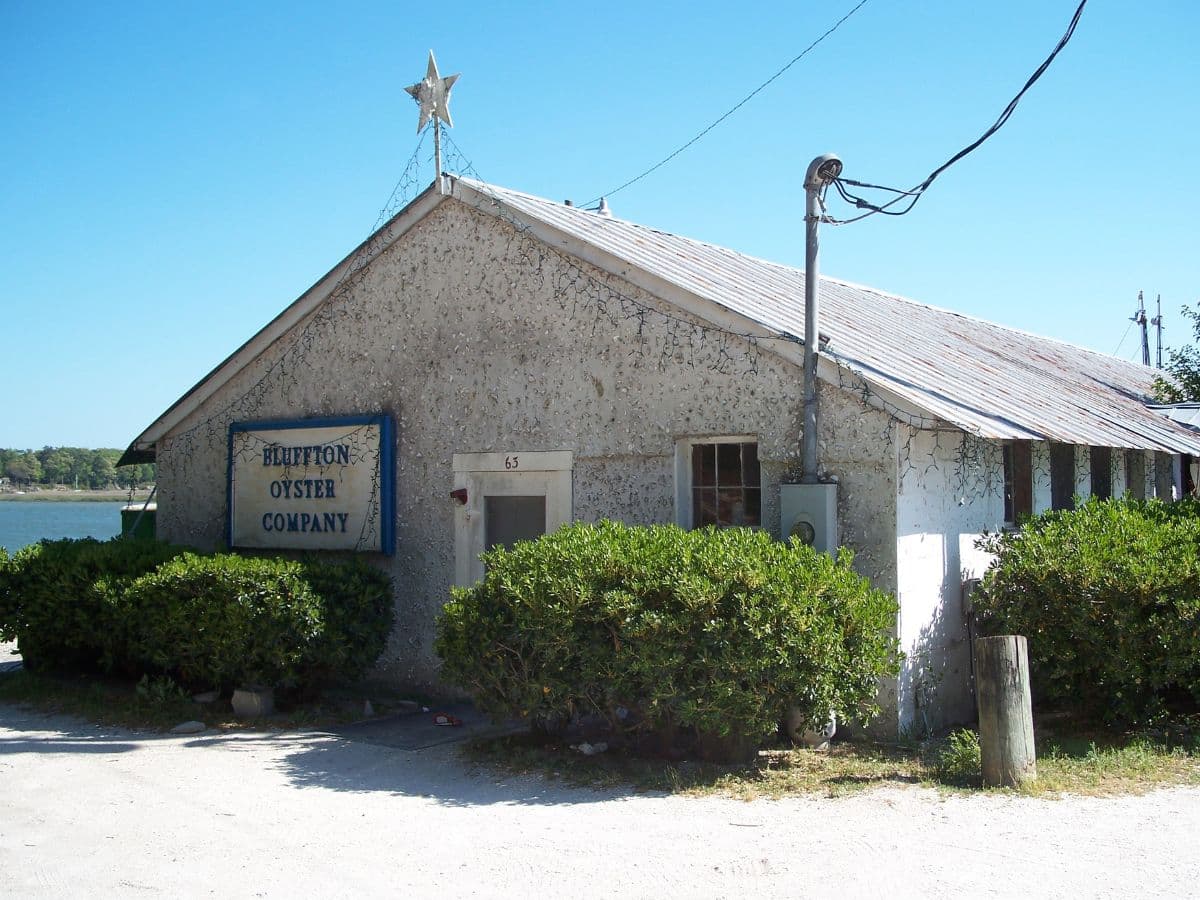
Old Town Bluffton looks charming in daylight, with its historic homes, churches, galleries and streets leading toward the May River.
Then the sun goes down.
During the Civil War, much of Bluffton was burned in 1863, including the summer residence of Squire William Pope’s family. The carriage house and another small building survived.
According to local lore, Pope’s wife and daughter eventually returned to Bluffton and lived in the remaining structure. Long after they were gone, stories began circulating that lights or candles could sometimes be seen glowing inside the building on nights when the moon was full.
It is the kind of story that feels particularly at home in Bluffton. One minute you’re strolling down a familiar Old Town Bluffton street. The next you’re wondering whether that light in an old window was actually there a second ago.
The Music That Won’t Stop in Old Town Bluffton
Another Bluffton story is considerably more recent and much sadder.
The Sarah Riley Hooks House on Bridge Street is associated with musician Tony Hooks, who was killed there in 1988. According to the South Carolina Lowcountry Tourism Commission’s account of the legend, locals later began telling stories that Tony’s guitar could still occasionally be heard near the house, particularly when the tide was high and the moon was full.
Whether anyone is actually playing after midnight is another matter entirely.
But the image is a memorable one: Old Town quiet, the May River nearby, and a few faint guitar notes carrying through the trees with no obvious musician attached.
Read the Lowcountry Tourism Commission’s Bluffton and Hilton Head ghost stories.
The Chapel of Ease on St. Helena Island
Drive through Beaufort and onto St. Helena Island and you’ll find one of the area’s most atmospheric historic sites: the ruins of the Chapel of Ease.
The tabby chapel dates to around 1740 and once served residents who otherwise faced a difficult journey into Beaufort for worship. Today, its roofless walls and old cemetery have become the setting for several local ghost stories.
One of the strangest involves the Fripp mausoleum.
According to the legend, the mausoleum was damaged when soldiers searched it for treasure during the Civil War. Workers later attempted to seal the entrance with bricks. When they returned, the bricks had reportedly been removed and stacked neatly nearby.
They tried again and the same thing supposedly happened.
Eventually, the entrance was left partially open.
Visitors over the years have also reported seeing figures around the cemetery, including a woman in white carrying a child. Others claim to have heard voices, prayers or singing near the chapel ruins.
There is no need for elaborate special effects here. After sunset, old tabby walls surrounded by moss-covered trees do most of the work themselves.
The Mysterious Lands End Light
Continue farther down St. Helena Island and you’ll reach the setting of another enduring Beaufort County legend: the Lands End Light.
For decades, people have told stories about a mysterious light appearing along Lands End Road.
What is it?
That depends entirely on whom you ask.
One story connects it to a Confederate soldier. Another describes the spirit of an enslaved man separated from his family. Yet another attributes the light to a soldier from nearby Fort Fremont who died in the early 1900s.
The common thread is the light itself, described as a single glowing point that seems to move along the road, sometimes growing larger as it approaches before suddenly disappearing.
The legend became so well known that generations of local teenagers reportedly made late-night trips to Lands End Road hoping to see it.
The Castle’s Unusual Resident
Downtown Beaufort’s historic homes already look as though they should come with a few stories, but “The Castle” on Craven Street may have more than most.
The house dates to the 19th century and was used during the Civil War era, with part of the property reportedly serving military hospital purposes. Local folklore, however, reaches back much farther.
The home’s best-known ghost story involves a jester sometimes called Guenache or Gauche, said in various versions of the tale to have arrived in the area during the 16th century.
Over the years, people connected with the house have reported seeing a small figure dressed in clothing resembling a jester’s costume. Other stories involve furniture moving, doors opening, bells ringing and unexplained activity throughout the house.
There are plenty of questions about how much of the story can be historically documented, which is exactly why it belongs firmly in the category of folklore.
Still, if a centuries-old jester starts ringing bells in the hallway, we’re comfortable letting someone else investigate first.
Haints, Spirits and Lowcountry Storytelling
Not every Lowcountry ghost story is about a specific building.
Stories of haints, spirits and supernatural encounters are also part of Southern and Gullah storytelling traditions. South Carolina ETV has explored the history of haints and Gullah ghost stories, including the way these beliefs and stories have been handed down culturally through generations. South Carolina ETV
That larger tradition helps explain why ghost stories remain such a natural part of life here.
They aren’t simply Halloween entertainment. Many grew out of real places, real losses and communities trying to make sense of what came before them.
Explore South Carolina ETV’s collection of ghost stories and folklore.
When History Refuses to Leave
Spend enough time in Hilton Head, Bluffton or Beaufort and you realize the past isn’t tucked neatly behind museum glass.
It’s everywhere.
It’s beneath walking trails, behind centuries-old walls and inside cemeteries beside busy roads. It’s in family stories that have been told so many times no one remembers exactly where the facts stop and the folklore begins.
And maybe that’s why Lowcountry ghost stories endure.
You don’t have to believe the Blue Lady still wanders Hilton Head or that William Baynard is making late-night rounds through Sea Pines. You don’t have to wait for a full moon in Bluffton or go searching for a strange light on St. Helena Island.
The stories still give us something valuable: another way to look at familiar places and remember just how much happened here before any of us arrived.
Because around here, sometimes the most interesting thing about a property isn’t what’s listed on the deed.